


Indonesia’s E-Waste Challenge Is Becoming More Urgent
Recent e-waste news gives Indonesia a useful reference point. India has received recycling capacity commitments of 850 kilotonnes, compared with an initial target of 270 kilotonnes, under a programme tied to critical minerals from e-waste, lithium-ion battery scrap, and other secondary materials. The same programme has approved 58 recyclers and is tied to a wider push to build domestic processing capacity for battery minerals.
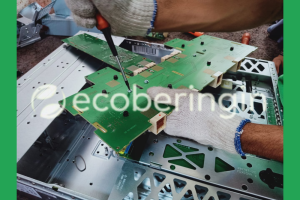
The direction is clear: countries are starting to treat retired electronics as a regulated material source. Computers, servers, phones, batteries, and printed circuit boards contain metals that matter for manufacturing. The operational question is whether those materials move through formal handling, documented processing, and proper recovery, or whether they leave the system through informal channels.
Existing Regulations Already Cover Electronic Waste
This is relevant for Indonesia because the legal basis already exists. UU No. 32 Tahun 2009 covers environmental protection and management, including the management of hazardous substances and hazardous waste. The BPK database lists the law’s scope as including “Pengelolaan Bahan Berbahaya dan Beracun serta Limbah Bahan Berbahaya dan Beracun.”
The more detailed operational reference is PP No. 22 Tahun 2021. It regulates environmental approvals, environmental quality management, B3 waste management, non-B3 waste management, supervision, and administrative sanctions. The regulation also requires supervision and enforcement to verify compliance with approved environmental obligations.
Data Protection Extends Beyond Asset Retirement
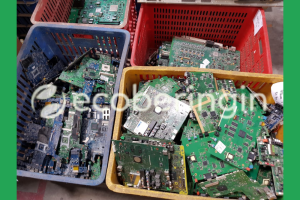
Electronic waste is already named in the B3 waste list. Code B107d covers electronic waste including CRT, fluorescent lamps, printed circuit boards, and wire rubber or metal wire, depending on the source text of the appendix version.
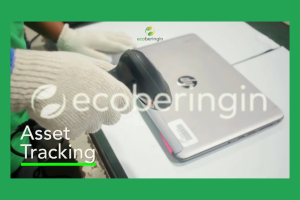
For companies, this creates a practical duty. Retired IT assets should be identified, recorded, stored properly, handed over to the right party, transported with documentation, processed according to their material risk, and closed with proof. That is basic housekeeping for anyone handling assets that may contain hazardous components.
There is also the data layer. UU No. 27 Tahun 2022 tentang Pelindungan Data Pribadi regulates personal data processing, the duties of data controllers and processors, transfers, sanctions, dispute settlement, prohibited uses, and criminal provisions. The same law defines personal data protection as the effort to protect personal data across the processing chain.
That matters at the disposal stage. A company may retire a laptop, server, storage array, copier, medical device, or ATM component, but the data inside the equipment may still fall under internal policy, contractual duties, sectoral rules, or the PDP Law. Disposal is part of the asset lifecycle, so IT, legal, procurement, compliance, and environment teams should treat it as a controlled process.
Global ITAD and Recycling Continue to Expand
The overseas market is moving in the same direction. Paladin, an IT asset management and recycling company, is expanding its global ITAD network to around 600,000 square feet. WEEE Ireland reported recycling 21.1 million devices in 2025, equal to 39,000 metric tons, with 82% material recovery from those items. The EV battery recycling market is also expected to grow from $1.4 billion in 2026 to $19 billion by 2033, according to figures cited by Resource Recycling.
Building a Better Standard for Retired IT Assets
Indonesia should follow up with a more explicit working standard for retired IT assets. The starting point can be simple: classify the asset, identify the data risk, check whether the material falls under B3 handling, require licensed transport and processing where applicable, record the chain of custody, and require a certificate for data destruction or recycling completion.
This would help companies close a common gap. Many organizations have good procurement records for new assets, but weaker records when assets leave use. Old devices may sit in storage, move between departments, get sold without proper erasure, or get handled as ordinary scrap. The risk is practical: lost residual value, unclear disposal records, weak audit trails, exposure of personal data, and improper handling of hazardous components.
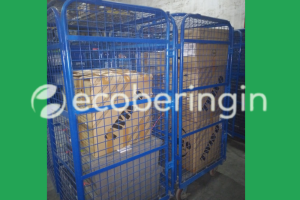
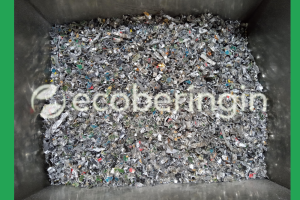
A proper ITAD process follows a clear and structured workflow. Assets are inventoried, collected, transported with proof, assessed for reuse or recycling, wiped or destroyed based on the media type, processed through documented methods, and reported back to the owner. Eco Beringin’s work already sits in that structure through IT asset value recovery, data destruction, and e-waste recycling, supported by R2v3, ISO 9001, ISO 14001, and ISO 45001 certifications.
From Compliance to Everyday Practice
The next step for Indonesia is enforcement by routine habit. Procurement teams should include disposal requirements in vendor contracts. IT teams should maintain asset exit records with the same discipline as asset intake records. Compliance teams should ask for proof of erasure, shredding, degaussing, or recycling. ESG teams should report what was processed, how it was processed, and what documentation supports the claim.
The law is already pointing in the right direction. The market is also moving there. The work now is execution: documented disposal, proper data destruction, correct B3 handling, and traceable recovery for retired electronics.
A fair question for any organization is simple: when IT assets leave your control, what document proves the final handling?