


Over the past few days, two developments have shown that waste management is receiving attention from very different parts of Indonesia.
In Bali, Danantara Indonesia began work on a waste-to-energy plant in Pedungan, Denpasar. The Rp3 trillion facility is designed to process around 1,500 tonnes of municipal waste per day when it starts operating, which is scheduled for 2028.
A day earlier, Institut Teknologi Sepuluh Nopember reported on a collaboration with Institut Teknologi Bandung where students discussed electronic waste through an international diplomacy forum. The discussion covered health, economic interests, environmental responsibility and cooperation between countries.
One project involves heavy equipment and public funding. The other involves students around a conference table. Both indicate that waste is becoming a subject of planning, policy and investment in Indonesia.
Electronic waste needs a proper place in that discussion.
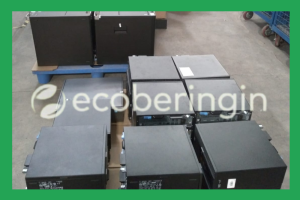
Electronic Waste Requires a Separate Process
Municipal waste and electronic waste cannot be handled in the same way.
An old laptop may contain plastics, aluminium, copper, circuit boards, a battery and a storage drive. A discarded server may still contain company records, customer information, employee data or internal documents. Medical equipment may contain patient information as well as components that require controlled handling.
Putting these items into a general waste stream creates several problems at once.
The battery may be damaged during transport or compaction. Components containing hazardous materials may be broken without proper controls. Useful metals can be lost. Storage media may leave the building with readable data still inside.
That last point often receives less attention than it should.
From a company’s perspective, an old computer is usually removed from the asset register and placed in storage. After that, responsibility becomes unclear. Someone arranges collection. A truck arrives. The equipment leaves the premises.
The company may know who collected it. It may have no reliable record of what happened afterward.
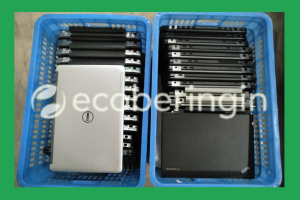
A Storage Room is Part of the Waste Problem
Most company e-waste does not go directly from a desk to a recycling facility.
It spends months or years in a storeroom.
There are practical reasons for this. IT teams are busy. Finance needs to complete the write-off. Procurement needs to appoint a vendor. Legal may want to review the contract. Nobody is quite sure whether the equipment still has resale value.
Some devices may still be usable. Others may have failed. Drives become separated from their original machines. Asset labels fall off. Employees change roles. The person who prepared the first inventory moves to another company.
By the time the equipment is finally collected, the business may struggle to confirm what it owns, what data remains on it and which disposal method is appropriate.
This is why electronic waste management should begin before the truck arrives.
A sound process starts with an inventory. Each asset should be identified and matched with an agreed treatment route. Reusable equipment can be tested, wiped and prepared for resale or redeployment. Failed storage media may require degaussing, shredding or another approved destruction method. Batteries, circuit boards, metals and plastics then follow their respective processing routes.
The company should receive records that correspond with the assets collected and the work completed.
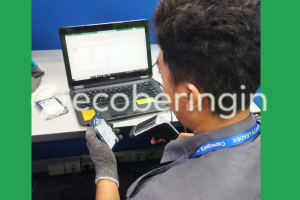
Indonesia Will Retire More Electronic Equipment
Indonesia continues to add digital infrastructure across banking, public services, healthcare, education, retail, telecommunications and data centres.
Every installation has a retirement date.
Servers reach the end of support. Employee laptops are replaced. Network equipment becomes incompatible with newer systems. Storage devices fail. Hospital and laboratory equipment is upgraded. Schools replace computer rooms in batches.
This creates a regular flow of retired electronics, even when the devices still look serviceable from the outside.
Companies therefore need to plan for removal with the same care used for purchasing and deployment. The work involves several departments. IT understands the equipment and data. Finance handles asset value and write-offs. Procurement appoints service providers. Security and compliance teams need evidence that data and equipment were handled according to company requirements.
Leaving the matter to a general waste collector may be cheaper on the invoice. The missing controls can become expensive later.
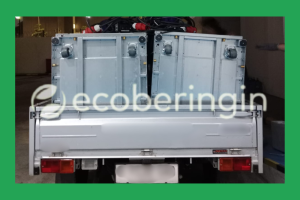
Infrastructure is Only One Part of the Job
The Bali waste-to-energy project shows the scale of public investment required to deal with municipal waste. Electronic waste requires different facilities, trained workers, documented handling and clear downstream controls.
The discussion held by ITS and ITB also matters. It places electronic waste within questions of health, trade, resource use and accountability. Those questions will become more practical as Indonesia buys, uses and retires greater volumes of electronic equipment.
For businesses, the first step is fairly ordinary: find out what is sitting in storage.
Count the laptops. Identify the drives. Check the batteries. Match the serial numbers. Decide which assets can be reused and which must be destroyed or recycled. Record who takes custody and ask for evidence of the final treatment.
It is routine work when handled regularly. It becomes difficult when postponed for five years.
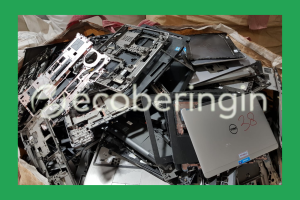
Indonesia is beginning to put more money, research and policy attention into waste. Companies can support that work by treating retired electronics as a controlled asset stream, with records from collection through final processing.
A useful question for any IT, finance or procurement team is simple:
How much retired electronic equipment is currently sitting inside the company, and can anyone account for every device?
Sources
Institut Teknologi Sepuluh Nopember, “Kolaborasi ITS–ITB Hadirkan Ruang Diplomasi Internasional Bahas Pengelolaan E-Waste,” 7 July 2026:
https://www.its.ac.id/news/kolaborasi-its-itb-hadirkan-ruang-diplomasi-internasional-bahas-pengelolaan-e-waste/
Reuters, “Indonesia wealth fund Danantara starts construction of first waste-to-energy project,” 8 July 2026:
https://www.reuters.com/business/energy/indonesia-wealth-fund-danantara-starts-construction-first-waste-to-energy-2026-07-08/
Antara, “Danantara breaks ground on Bali waste-to-energy plant,” 8 July 2026:
https://en.antaranews.com/news/421904/danantara-breaks-ground-on-bali-waste-to-energy-plant